

Local Law 126 Explained for Property Managers: NYC Parking Garage Inspection & Repair Guide
A parking garage can look fine from behind the wheel while concrete deterioration, corrosion, and water damage quietly build underneath the driving surface. For NYC property managers, that gap between how a garage looks and what’s actually happening structurally is exactly what Local Law 126 was written to address.
Local Law 126 of 2021 established periodic inspection requirements for parking structures across New York City. Under the current NYC Department of Buildings framework, qualifying structures need a condition assessment from a licensed Professional Engineer who holds DOB’s Qualified Parking Structure Inspector (QPSI) designation, at least once every six years. Miss that window, and a maintenance issue can turn into a compliance problem fast.
Malatesta Paladino has worked on NYC concrete and masonry since 1985, and today helps property managers and building owners take an LL126 inspection report and turn it into completed, documented repairs. The company provides parking garage repair and Local Law 126 compliance services across New York City. This guide walks through who the law covers, what the inspection involves, and what property managers should do once an inspection report lands on their desk.
What Is Local Law 126?
Think of Local Law 126 as the parking-garage counterpart to the facade inspection law, Local Law 11, also known as FISP.
Instead of focusing on exterior walls, Local Law 126 addresses parking-structure conditions and structural elements such as slabs, beams, columns, and systems that protect those elements from water and deterioration.
NYC established a formal inspection and filing process for qualifying parking structures, with the NYC Department of Buildings overseeing compliance.

Local Law 126 at a Glance
| Requirement | Local Law 126 |
| Law | Local Law 126 of 2021 |
| Primary focus | NYC parking structures |
| Inspection | Periodic structural condition assessment |
| Inspector | NYS-licensed Professional Engineer designated as a QPSI |
| Filing | NYC Department of Buildings |
| Inspection cycle | At least once every 6 years under the current DOB framework |
| Repair requirement | Repairs may be required when deficiencies are identified |
For the most current requirements, property managers should verify their property’s obligations directly with the NYC Department of Buildings parking structure guidance.
Here’s the practical part: if your property has a covered parking structure, it is on a compliance clock. That clock keeps running whether or not the garage looks fine from where you’re standing.

Which NYC Parking Structures Are Covered by Local Law 126?
The law covers structures used for parking or storing motor vehicles, whether they’re built into a building or standing on their own.
Depending on the property’s configuration, this can include:
- Above-grade parking garages
- Below-grade parking garages
- Parking structures incorporated into buildings
- Open parking structures
- Parking facilities associated with mixed-use properties
Some structures fall outside the requirements. Examples include:
Garages serving one- and two-family homes
- Garages with fewer than three cars
- Unenclosed, unattached outdoor parking lots
- Automotive repair shops
- Automotive showrooms
- Automotive service stations
Not sure whether your parking structure is subject to LL126?
Don’t go only by how the garage is described internally. Confirm applicability with a qualified design professional and the current NYC DOB requirements.
How Often Does a Parking Garage Need to Be Inspected Under Local Law 126?
NYC DOB’s current framework calls for a periodic condition assessment at least once every six years.
The city staggered inspection requirements across different boroughs and community districts rather than requiring every parking garage to file at the same time.
For the current inspection cycle, NYC DOB identifies:
Location | Cycle 1 Filing Window |
Manhattan Community Districts 1–7 | 2022–2023 |
Manhattan Community Districts 8–12 & Brooklyn | 2024–2025 |
Bronx, Queens & Staten Island | January 1, 2026 – December 31, 2027 |
However, property managers should verify the exact filing history and applicable deadline for their individual property through DOB rather than relying solely on the borough table.
Who Can Perform a Local Law 126 Parking Garage Inspection?
The statutory inspection isn’t something a general contractor or maintenance company can simply sign off on.
A Qualified Parking Structure Inspector (QPSI) is a New York State-licensed and registered Professional Engineer who has been designated by DOB to perform these inspections.
The QPSI:
- Performs the required structural assessment
- Evaluates accessible structural elements
- Looks for signs of deterioration
- Classifies the structure’s condition
- Prepares and files the required condition assessment documentation
An Important Distinction for Property Managers
Malatesta Paladino is not the statutory QPSI performing the inspection.
Its role comes after—or alongside—the engineering assessment as the repair and restoration contractor that can address conditions identified by the engineer.
This distinction is important when planning LL126 work: the property manager may need both a qualified inspection professional and an experienced repair contractor.
What Happens During a Local Law 126 Parking Structure Inspection?
The inspection is designed to identify conditions that could affect the safety and durability of the parking structure.
A property manager may encounter findings involving:
- Concrete spalling
- Concrete cracking
- Exposed or corroded reinforcing steel
- Deteriorated slabs
- Beam deterioration
- Column deterioration
- Soffit damage
- Water infiltration
- Failed waterproofing
- Deteriorated expansion joints
- Drainage problems
- Other structural deterioration
The QPSI then evaluates the observed conditions and prepares the appropriate condition assessment documentation.
What Property Managers Should Remember
The inspection is not simply a visual walkthrough to determine whether the garage “looks okay.”
A garage can appear operational while deterioration is developing within concrete, reinforcing steel, waterproofing systems, or structural components.
What Happens If a Parking Garage Is Found Unsafe?
This is where an LL126 inspection becomes an immediate property-management issue.
If an inspection identifies an unsafe condition, the property owner may need to take immediate protective measures, including restricting access to affected areas or addressing other safety concerns identified by the engineer.
Repairs then need to be coordinated with the appropriate professionals and documented according to the applicable DOB requirements.
Property Manager Emergency Checklist
- Review the engineer’s report.
- Identify the affected areas.
- Implement required protective measures.
- Coordinate with the QPSI or engineer.
- Contact an experienced parking garage repair contractor.
- Develop the repair scope.
- Establish a repair schedule.
- Complete the required repairs.
- Coordinate engineer verification where required.
- Complete the necessary DOB documentation.
For complex or urgent conditions, having a contractor experienced in structural concrete and parking garage restoration can help property managers move from inspection findings to a defined repair scope.

Common Parking Garage Problems Found During Inspection
Concrete Spalling
Concrete spalling occurs when portions of concrete break away from a surface. In parking structures, deterioration can expose reinforcing steel and create additional pathways for moisture.
Malatesta Paladino’s concrete restoration capabilities include:
- Spalled concrete repair
- Structural patching
- Crack injection
- Full-depth slab repair
- Partial-depth patching
- Form-and-pour concrete restoration
See the company’s concrete and masonry restoration services for more information.
Corroded or Exposed Rebar
When reinforcing steel corrodes, the surrounding concrete can crack and spall.
A repair may involve exposing the affected reinforcement, treating or replacing the damaged steel, and restoring the surrounding concrete.
Malatesta Paladino lists rebar exposure treatment and replacement among its concrete restoration capabilities
Cracks in Concrete
Not every concrete crack indicates the same problem.
Property managers may encounter:
- Surface cracking
- Structural cracking
- Cracks associated with water infiltration
- Cracks around deteriorated reinforcement
The significance of a crack should be determined by the appropriate qualified professional rather than assumed from its appearance alone.
Water Infiltration
Water is one of the biggest enemies of parking structures. Persistent water infiltration can contribute to deterioration of concrete and corrosion of embedded steel. Malatesta Paladino provides waterproofing, caulking and traffic-bearing membrane services, including parking structure waterproofing and traffic-bearing membrane systems. Depending on the project, repair work can include:- Traffic-bearing membrane installation
- Membrane replacement
- Expansion joint waterproofing
- Drainage repairs
- Protective concrete coatings
- Below-grade waterproofing
Failed Expansion Joints
Expansion joints and sealants play an important role in keeping water away from vulnerable structural components.
When joints deteriorate, water can bypass protective systems and reach the structural slab below.
Replacement of failed joints and sealants can therefore be an important part of a broader parking garage repair strategy.
Deteriorated Beams, Columns and Soffits
Parking garage deterioration isn’t limited to the driving surface.
Structural elements such as:
- Beams
- Columns
- Soffits
- Slabs
may also require repair depending on the inspection findings.
Malatesta Paladino provides structural concrete and restoration services for commercial properties throughout NYC.
Local Law 126 Parking Garage Repair Services
When an LL126 inspection identifies repairable deterioration, property managers need a contractor capable of addressing the actual conditions identified by the engineer.
Malatesta Paladino’s current parking garage service offering includes:
- Concrete spall repair
- Structural patching
- Crack repair
- Full-depth and partial-depth repairs
- Concrete restoration
- Corroded rebar treatment
- Rebar replacement
- Structural concrete repairs
- Parking deck waterproofing
- Traffic-bearing membranes
- Waterproofing systems
- Expansion joint replacement
- Sealant replacement
- Waterproofing-related repairs
- Protective coating systems
- Concrete surface protection
- Corrosion-related protection
You can see the full Malatesta Paladino parking garage repair service for the company’s current scope of work.
How Malatesta Paladino Helps Property Managers with Local Law 126 Repairs
For property managers, the biggest challenge isn’t necessarily finding someone who can patch concrete. It’s coordinating the repair process while keeping safety, scheduling, documentation and building operations in mind.
40+ Years of NYC Experience
Malatesta Paladino has been in business since 1985 and works with commercial property owners, building managers, developers and general contractors throughout NYC.
Comprehensive Repair Capabilities
The company combines concrete restoration, structural work, waterproofing, traffic-bearing membranes and other related capabilities under one contractor.
Experience With Active Facilities
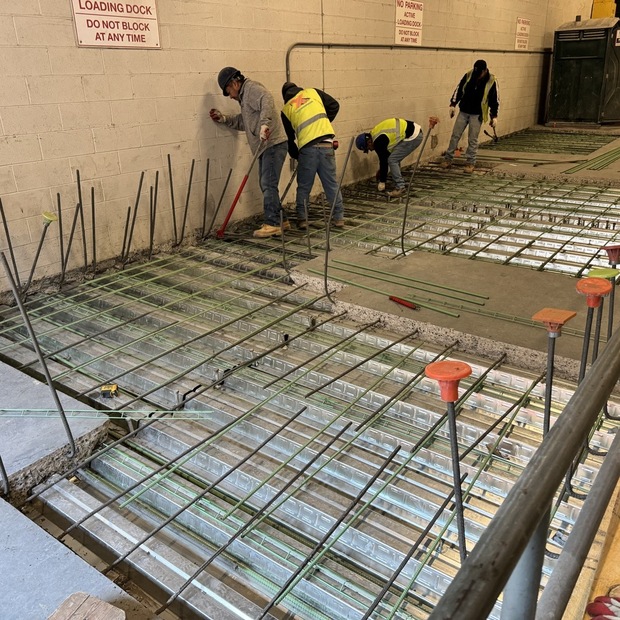
A good example is Malatesta Paladino's ongoing NYU Langone Hospital parking garage repair project at 530 1st Ave. The project involves structural repairs to deteriorated concrete and structural elements while coordinating work around hospital operations, staff, patients and emergency access.
Proven commercial portfolio
Completed parking structure and concrete repair projects at major NYC commercial properties
Can Local Law 126 Parking Garage Repairs Be Completed Without Closing the Entire Garage?
Sometimes.
The answer depends on:
- Type of repair
- Location of deterioration
- Severity of the condition
- Engineer’s requirements
- Safety requirements
- Garage traffic patterns
- Required staging and access
Localized repairs may be phased so that other portions of the garage remain operational.
More extensive work, such as major deck repairs or membrane replacement, may require temporary closure of an affected area.
For property managers, the goal should be to develop a repair plan that addresses the engineer’s requirements while minimizing unnecessary disruption to building operations.
Local Law 126 vs. Local Law 11: What's the Difference?
Property managers often confuse these two requirements because both involve NYC building safety and DOB oversight.
| Local Law 126 | Local Law 11 / FISP | |
| Primary focus | Parking structures | Building facades |
| Responsible professional | QPSI | Qualified Exterior Wall Inspector |
| Main concern | Parking structure safety | Exterior wall/facade safety |
| Inspection cycle | Parking structure requirements | FISP requirements |
| DOB involvement | Yes | Yes |
| Repairs may be required | Yes | Yes |
A property can potentially have both obligations.
If your property also needs facade inspection or restoration work, see Malatesta Paladino’s Concrete, Masonry & Facade Restoration services.
What Property Managers Should Do After Receiving an LL126 Inspection Report
Don’t let the report sit in an inbox.
Use this process:
Step 1: Read the engineer's classification
Understand what the report says about the condition of the structure.
Step 2: Identify every repair item
Separate individual repair recommendations and affected areas.
Step 3: Identify immediate safety issues
Determine which conditions require immediate protective measures.
Step 4: Coordinate with the QPSI or engineer
Make sure the repair scope reflects the engineer's findings.
Step 5: Bring in a qualified repair contractor
Choose a contractor with experience in concrete, structural and parking garage restoration.
Step 6: Build a repair schedule
Consider garage operations, tenant/visitor traffic and access.
Step 7: Complete the repairs
Address the conditions identified in the inspection.
Step 8: Coordinate engineer verification
Where required, have the appropriate professional verify completed work.
Step 9: Complete required DOB documentation
Make sure the applicable filings and certifications are completed.
Local Law 126 Property Manager Checklist
Use this as a quick reference:
- Confirm whether the parking structure is subject to LL126
- Identify the applicable inspection cycle
- Check the property's DOB records
- Hire a qualified QPSI
- Complete the required inspection
- Review the condition assessment
- Identify unsafe conditions
- Implement protective measures where necessary
- Obtain repair proposals
- Coordinate with the engineer
- Schedule repairs
- Complete concrete and structural repairs
- Address waterproofing and drainage problems
- Repair expansion joints where necessary
- Complete required documentation
- Confirm applicable DOB filing requirements are satisfied
- Maintain records for the next inspection cycle
Frequently Asked Questions About Local Law 126
What is Local Law 126 in NYC?
Local Law 126 of 2021 established NYC’s parking structure inspection requirements and created a formal process for periodic condition assessments and DOB filings.
Does Local Law 126 apply to my parking garage?
It depends on the characteristics of the parking structure and applicable NYC requirements. Property owners should verify applicability with the current NYC DOB requirements and a qualified professional.
How often does a NYC parking garage need to be inspected?
Under the current DOB framework, qualifying parking structures are subject to periodic condition assessments at least once every six years. Always verify the specific filing cycle and requirements for your property with DOB.
Who can perform an LL126 inspection?
The statutory inspection must be performed by a qualified Professional Engineer designated by DOB as a Qualified Parking Structure Inspector.
What happens if my garage is classified as unsafe?
Unsafe conditions require prompt action and may require protective measures, restricted access and repairs. The specific response depends on the engineer’s findings and applicable DOB requirements.
Does Malatesta Paladino perform Local Law 126 inspections?
No. The statutory inspection is performed by the qualified engineer/QPSI. Malatesta Paladino’s role is as the repair and restoration contractor addressing conditions identified through the inspection.
Does Malatesta Paladino repair concrete and rebar in parking garages?
Yes. Its current service offering includes concrete restoration, spall repair, structural patching, rebar treatment and replacement.
Does Malatesta Paladino provide parking garage waterproofing?
Yes. The company provides waterproofing and traffic-bearing membrane services for parking structures.
Can repairs be performed while a garage remains operational?
Depending on the scope and location of the work, repairs can sometimes be phased. Larger projects may require closure of affected areas.
How long do parking garage repairs take?
It depends on the repair scope, structural conditions, access requirements and project complexity. A contractor should provide a project-specific schedule after reviewing the work.
Does Malatesta Paladino help with Local Law 126 documentation?
The company supports documentation and coordinates with the property owner’s engineer regarding required filings and certifications.
Don't Wait Until a Parking Garage Condition Becomes an Emergency
A Local Law 126 inspection report shouldn’t sit in an inbox until the deadline gets close.
If your report identifies concrete deterioration, rebar corrosion, waterproofing problems, expansion joint failures or other repair needs, the next step is to understand the scope and put the right repair strategy in place.
Malatesta Paladino works with property managers, building owners and engineers on parking garage repair requirements throughout NYC.